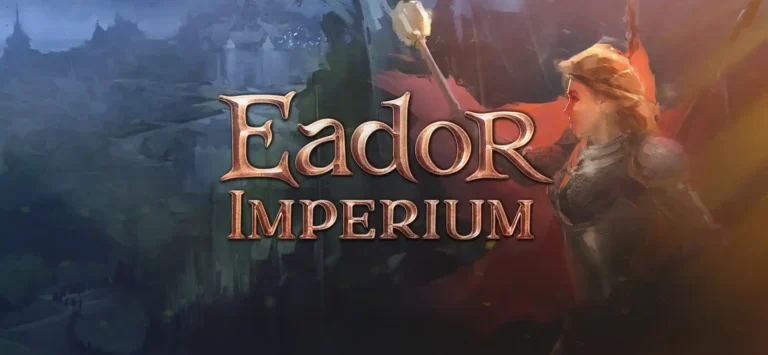
Eador: Imperium
 PC
PC

Eador: Imperium is a turn-based fantasy grand strategy 4X video game developed and published by the independent studio Snowbird Games. Originally launched into full retail release on January 27, 2017, the title functions as a massive standalone expansion and mechanical sequel to 2013’s Eador: Masters of the Broken World.
By packaging the complete base framework of its predecessor and layering it with a handcrafted storyline, completely new hero specializations, mechanics, and tactical environments, Imperium represents the ultimate, content-complete edition of the modern 3D Eador universe.
The title perfectly preserves the franchise’s legendary three-tier hybrid design: combining the macroscopic province conquest of Civilization, the tight, grid-based squad battles of Heroes of Might and Magic, and the deeply granular itemization and leveling loops of traditional role-playing games.
Technical Specifications
| Attribute | Details |
| Developer | Snowbird Games |
| Publisher | Snowbird Games |
| Engine | Upgraded 3D Strategy and Tactical Resolution Engine |
| Platform | Microsoft Windows (PC) |
| Release Date | January 27, 2017 |
| Genre(s) | Turn-based strategy, Tactical RPG, 4X Grand Strategy |
| Mode | Single-player |
The Four Threads of the Imperium Campaign
While Masters of the Broken World tasked players with a sandbox divine conquest across the cosmic void, Eador: Imperium introduces a tightly directed, character-driven narrative campaign. The story is woven across four highly asymmetric protagonists, each navigating the crumbling socio-political fabric of an empire on the brink of an existential abyss:
- The Vengeful Wizard: A brilliant young mage pursuing absolute, bloody retribution against the religious fanatics who dismantled his life.
- The Barbarian Priestess: A fierce tribal leader navigating a harsh frontier, desperately searching for a higher spiritual purpose to unite her fractured clans.
- The Cynical Mercenary: A battle-hardened veteran forced to wield his blade against an encroaching, extra-dimensional horror threatening to swallow his home.
- The Imperial Governor: A stoic bureaucrat appointed to assert absolute political authority over a fiercely defiant, rebellious border province in the middle of a massive socio-economic collapse.
Shard Progression & Stronghold Blueprints
Gameplay operates across a parallel macroscopic and microscopic universe. The world is fractured into floating islands of land drifting within the void, known as Shards.
To secure a Shard, players initialize a match holding a single province hex, utilizing powerful Heroes to clear hidden dungeons for loot and expand their borders hex-by-hex until the enemy’s capital city is besieged and completely dismantled.
Kingdom management is governed entirely through your home Stronghold Capital, which is partitioned into nine interlocking structural quarters (Military, Magic, Trade, Craftsmen, etc.). Imperium enforces a strict Built-In Structural Restriction Matrix that forces players to make specialized strategic choices on every single Shard:
- Tier 1 Units: Factions may erect a maximum of four basic Tier-1 recruitment facilities (e.g., Swordsmen, Spearmen, Bowmen) per shard.
- Tier 2 Units: Strongholds are bottlenecked to a maximum of three Tier-2 recruitment buildings.
- Tier 3 Units: Players can construct a maximum of two heavy Tier-3 military buildings.
- Tier 4 Units: The absolute apex of production—players are restricted to a single legendary Tier-4 facility (such as a Paladin chapter house or a Phoenix roost) per shard map.
Specialized Hero Archetypes
Heroes remain the definitive linchpins of your empire; squads cannot maneuver or scout the map grid unless they are tethered to a commander’s army stack.
While the game retains the four core starting archetypes—the physical Warrior, the long-range Scout, the large-army Commander, and the spell-casting Wizard—Imperium expanded character specializations significantly.
Upon hitting level 10, heroes can execute a high-stakes dual-class profession shift to unlock powerful new mechanics:
- The Pilot: A high-tech marksman specialized in bypassing enemy defenses, utilizing advanced targeting mechanics and explosive engineering tools to shatter frontlines.
- The Lich: A dark transformation of the Wizard class. By investing heavily in the Necromancy skill, the hero permanently raises fallen enemies as immortal Undead thralls (such as Vampires, Wraiths, and Ghouls), bypassing standard gold recruitment costs.
- The Sentinel: A hyper-defensive evolution of the Warrior class. Sentinels act as immovable concrete roadblocks on the map, commanding elite armor-piercing strike modifiers and absolute psychological immunity to mental charms and fear vectors.
Tactical Hex Combat: Stamina and Morale Friction
When combat is initiated, the engine shifts down to an intricate Isometric Hexagonal Combat Layer where positioning and terrain variables entirely override raw unit statistics. Marshy swamps aggressively drain movement metrics, dense forests block archer lines-of-sight, and elevated hills provide severe accuracy and damage multipliers.
Units are modeled with extreme tactical granularity, tracking independent levels of Stamina and Morale alongside their health bars. Swinging giant broadswords, casting spells, or traversing rugged terrain rapidly depletes a unit’s physical stamina pools. A winded or exhausted soldier experiences massive defensive drops and can completely pass out mid-turn, leaving your frontlines exposed.
Concurrently, if a high-value squad general is cut down, your remaining militias will suffer a catastrophic morale drop, breaking out into total panic and running blindly toward the edges of the screen to desert the field entirely.
Modern Preservation Status (2026 Perspective)
As of June 2026, Eador: Imperium occupies a highly respected niche within independent strategy circles. Distributed actively on major digital personal computer storefronts like Steam and GOG.com for a standard baseline price of $19.99, the title stands as the final official footprint of Snowbird Games prior to the studio winding down its active development operations.
Because the software’s architecture was compiled around legacy 32-bit parameters and early DirectX 9 APIs, booting the vanilla client directly under a modern 64-bit Windows 11 operating system can occasionally trigger unhandled resolution crashes or end-of-turn freezes.
To experience the game with absolute stability today, contemporary strategy enthusiasts utilize lightweight compatibility wrappers:
- DirectX 9 translation tools (such as dgVoodoo2) are dropped into the root executable directory to cleanly translate archaic video commands into modern DirectX 11 or 12 calls in real-time. This eliminates mouse-cursor stuttering, prevents UI clipping errors on modern widescreen monitors, and ensures that the massive unit rosters, intricate multi-story stronghold grids, and challenging shard campaign storylines execute with flawless technical stability.