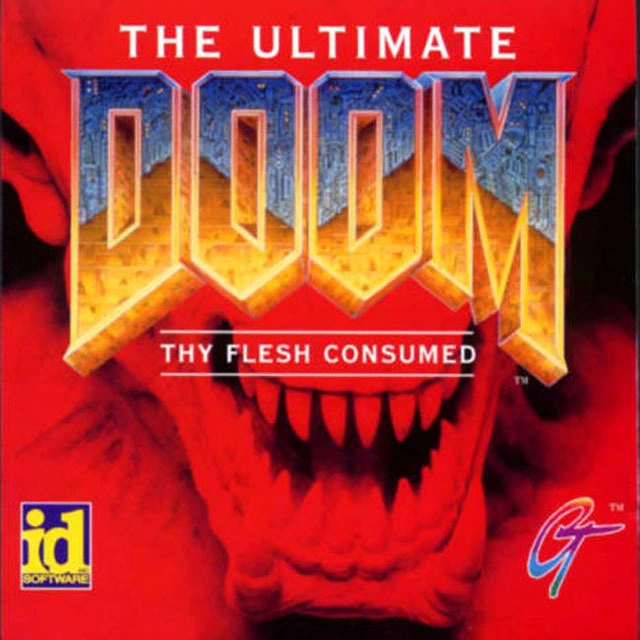
The Ultimate Doom
 PC
PC
 Activision,
  Bethesda Softworks, GT Interactive, id Software
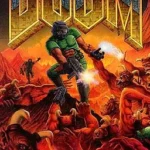
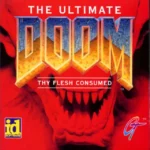
The Ultimate Doom is the definitive, updated 1995 retail release of the original 1993 masterpiece Doom, developed by id Software and published by GT Interactive. While the original 1993 release of Doom fundamentally altered the trajectory of the video game industry and codified the first-person shooter genre, The Ultimate Doom was designed to get the game onto physical retail shelves (as the original was primarily distributed via mail-order and shareware) and introduced a punishing, brand-new fourth episode to tie the story directly into Doom II.
Core Concept and Story
The narrative of Doom is famously minimal—lead programmer John Carmack famously compared the story in a video game to the story in a pornographic film: “It’s expected to be there, but it’s not that important.”
You play as an unnamed, silent space marine (affectionately known by the community as “Doomguy”). After assaulting a superior officer who ordered him to fire on civilians, he is exiled to the UAC (Union Aerospace Corporation) facilities on Mars. While he is guarding the perimeter, top-secret teleportation experiments on the Martian moons of Phobos and Deimos go horribly wrong, accidentally opening a literal gateway to Hell. With his entire unit wiped out, Doomguy is left alone with a pistol to blast his way through the demon-infested tech bases and descend into the fiery pits of Hell itself.
Gameplay and Features
Built on the revolutionary id Tech 1 engine, The Ultimate Doom established the absolute gold standard for FPS gameplay that developers would spend the next decade trying to replicate:
- Pure, Visceral Speed: Unlike modern shooters, Doomguy moves at a staggering, almost comical 50 miles per hour. The gameplay loop relies entirely on speed, circle-strafing, and dodging slow-moving projectiles (like the Imp’s fireballs) rather than hiding behind cover.
- The Iconic Arsenal: The game introduced the perfect weapon wheel. You start with brass knuckles and a pistol, quickly upgrading to the punchy Shotgun, the rapid-fire Chaingun, the devastating Rocket Launcher, the Plasma Rifle, and finally, the legendary room-clearing BFG 9000 (Big F***ing Gun).
- Labyrinthine Level Design: The levels, largely designed by John Romero and Sandy Petersen, are brilliant, abstract mazes. Finding red, blue, and yellow keycards to open corresponding doors was the primary objective, but the maps were absolutely packed with hidden walls, secret weapon caches, and trap rooms.
- Monster Infighting: A brilliant mechanical quirk. If a demon’s projectile accidentally hits another demon, they will turn on each other and fight to the death. Mastering the art of herding monsters into crossfires was a crucial tactic for surviving higher difficulties like “Ultra-Violence.”
“Thy Flesh Consumed” (The Fourth Episode)
The original 1993 Doom consisted of three episodes: Knee-Deep in the Dead, The Shores of Hell, and Inferno.
The major selling point of The Ultimate Doom was the inclusion of a brand-new, fourth episode titled Thy Flesh Consumed. Designed primarily by John Romero and American McGee, this episode was specifically engineered to challenge veteran players who had already mastered the original game.
It is notoriously, punishingly difficult. The very first two levels of the episode (Perfect Hatred and Against Thee Wickedly) throw the player into tight, hazard-filled arenas completely starved of ammunition and packed with high-tier enemies like Barons of Hell and Cacodemons. The episode serves as a narrative bridge, explaining how Doomguy escaped Hell and made his way back to Earth, setting the stage perfectly for the opening of Doom II: Hell on Earth.
The Modding Legacy
The Ultimate Doom is arguably the most modified and ported piece of software in human history. id Software purposefully designed the game files (the .WAD files, which stands for “Where’s All the Data?”) to be easily altered by the community.
This birthed a massive, thriving modding scene that is still incredibly active over thirty years later. Through modern “source ports” like GZDoom, players today can play The Ultimate Doom with mouselook, high-resolution textures, dynamic lighting, and literally tens of thousands of custom, fan-made levels ranging from terrifying horror overhauls to bizarre comedy mods. The game’s engine is so brilliantly optimized that the phrase “It runs Doom” has become a global tech meme, with people successfully running the game on everything from smart refrigerators and digital cameras to literal pregnancy tests.
Quick Note
The Ultimate Doom is the finalized, retail-ready version of the most important first-person shooter ever created.
In short: It took the flawless, lightning-fast 1993 blueprint that changed PC gaming forever, slapped a brutally difficult new nine-level campaign on top of it, and cemented Doomguy’s legacy as the undisputed king of the 90s digital bloodbath.