M.I.A.: Mission in Asia
 PC
PC Russobit-m
Where to buy

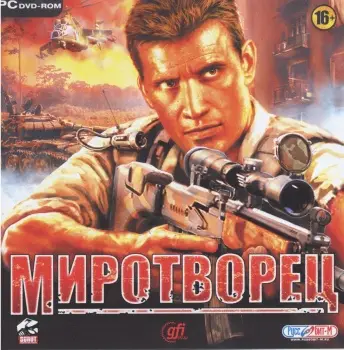
M.I.A.: Mission in Asia (known in Russia as Peacemaker or Миротворец) is a 2009 first-person shooter developed by the Russian studio Burut Creative Team (also referred to as Burut CT) and published by Game Factory Interactive, Strategy First, and Russobit-M. It originally launched on September 25, 2009, for PC (Windows). In 2025, the game was re-released digitally on Steam (app ID 3498980, full release around March 2025), making it more accessible again after years of obscurity.
Core Story
The game is set in 2007 in the fictional Eastern European countries of Primoria and Slavia (widely seen as stand-ins for real-world regions involved in the 2008 South Ossetia conflict, told from a Russian perspective). You play as a special FSS (Federal Security Service) agent sent into the battle zone in Slavia. Your initial mission is to track down and eliminate a traitor — FSBX Major Arur Kimov — but the situation quickly spirals into a larger conflict involving subversive activities, border tensions, and full-scale warfare. The story is linear and straightforward, delivered through brief cutscenes and in-mission radio chatter, focusing on solo espionage and combat operations in a war-torn region.
Gameplay and Features
M.I.A.: Mission in Asia is a classic linear tactical FPS with realistic military elements for its time:
- Realistic combat: Emphasis on weapon handling, bullet drop, suppression, and tactical enemy behavior. Opponents act with some intelligence, using cover and flanking.
- Weapons and environments: Authentic-feeling guns with detailed models, destructible elements in some areas, and varied mission locations (urban zones, rural battlefields, barracks defense, etc.).
- Mission structure: A series of story-driven levels involving infiltration, elimination targets, defense objectives, and large-scale firefights. Some missions include vehicle sections or tank encounters.
- Single-player only: No multiplayer or co-op. The campaign is short (typically 4–7 hours depending on difficulty and exploration).
The game aims for a gritty, documentary-style war simulation with tactical opponents and realistic engineering/weapons, but it is frequently criticized for clunky controls, inaccurate shooting when moving, long reload times, repetitive gameplay, and technical issues (bugs, poor AI in places, and awkward cutscenes). Many players describe it as a “shooting gallery” with limited depth.
PC Version (2009 / 2025 Steam re-release)
This is the only official version — no console ports (including Nintendo Switch, Switch 2, PlayStation, or Xbox) have ever existed. The original 2009 release used the X-tend engine and ran on very low-spec hardware. The 2025 Steam version is essentially the same game with modern distribution, but many users report it still requires a Russian locale (or locale emulator) for proper text display, has audio/codec issues with the soundtrack, and needs community fixes or tweaks for smooth play on current Windows versions. It supports basic graphics options and keyboard & mouse controls. The game is often available cheaply on Steam and runs on modest or older PCs, though it shows its age heavily in visuals, animations, and optimization.
No remaster or major updates have been applied beyond the digital re-release. Community feedback on Steam is mixed-to-negative, with many calling it a low-budget, amateurish title that feels dated even by 2009 standards.
Quick Note
M.I.A.: Mission in Asia is a niche, low-profile Russian tactical shooter best remembered as one of Burut CT’s final projects before the studio faded. It offers a short, straightforward war story with realistic weapon feel and tactical elements, but suffers from technical roughness, short length, and repetitive design. It appeals mainly to fans of obscure Eastern European FPS games from the late 2000s or players curious about titles inspired by real geopolitical events.
If you’re into budget military shooters and can pick it up very cheaply (or already own it), it provides a quick, gritty solo campaign through a fictional Asian/Eastern European conflict zone. Otherwise, expectations should be kept low — it’s more of a historical curiosity than a polished classic. “Sent alone into the war zone… one man against chaos.” Check the current Steam page for system requirements and user reviews before purchasing.