Hexen: Beyond Heretic
 Nintendo 64,
 Nintendo Switch,
 PC,
 PS 1,
 PS4,
 PS5,
 Sega Saturn,
 Xbox One,
 Xbox Series X/S
 Bethesda Softworks, GT Interactive, id Software
Where to buy




Hexen: Beyond Heretic is a first-person shooter developed by Raven Software and published by id Software for MS-DOS on October 30, 1995. It is the second game in Raven’s Serpent Riders trilogy, runs on a modified Doom engine, and replaces Heretic’s straight sequence of levels with hubs and three playable classes: Fighter, Cleric and Mage. A Windows release followed in North America on March 31, 1997. The 2025 bundle Heretic + Hexen holds a Metacritic score of 84 from 6 critic reviews.
It is an indirect sequel to Heretic: the story follows D’Sparil’s defeat, but you play one of three heroes you choose yourself. The expansion, Deathkings of the Dark Citadel, has its own page, and the real successor in the trilogy is Hexen II.
Technical Specifications
| Attribute | Details |
|---|---|
| Developer | Raven Software |
| Publisher | id Software (PC) |
| Designers | Eric C. Biessman · Michael Raymond-Judy |
| Composer | Kevin Schilder |
| Engine | Modified Doom engine (scripting with ACS) |
| Platform | Original: MS-DOS · Later: Mac OS · Windows · PlayStation · Sega Saturn · Nintendo 64 · RISC OS · 2025: Windows · Xbox One · Xbox Series X|S · PlayStation 4 · PlayStation 5 · Nintendo Switch |
| Release | October 30, 1995 (MS-DOS, NA and EU) · June 27, 1996 (Mac OS) · March 31, 1997 (Windows, NA) · March 21, 1997 (PlayStation, EU) · June 25, 1997 (Nintendo 64, NA) · August 7, 2025 (Heretic + Hexen) |
| Metacritic | 84 (Heretic + Hexen, 2025, 6 critic reviews) |
| Classes | Fighter (Baratus) · Cleric (Parias) · Mage (Daedolon) |
| Genre | First-person shooter, dark fantasy |
| Mode(s) | Single-player · multiplayer (PC network play up to 8 players) |
Plot: Korax and the Realm of Cronos
Hexen is set in the realm of Cronos, which is besieged by Korax, the second of the three Serpent Riders. It follows the events of Heretic, where D’Sparil was defeated. You play one of three heroes sent to destroy Korax, travelling through elemental dungeons, a wilderness, a mountainside seminary, a castle and a necropolis.
Classes: Fighter, Cleric, or Mage
Your choice of class changes how the game plays. The Fighter, Baratus, is tougher and faster and fights up close. The Cleric, Parias, sits in the middle with both melee and ranged options. The Mage, Daedolon, uses long-range spells but is the most fragile and slowest. Items also work differently per class: the Disc of Repulsion pushes enemies and projectiles away, and the Icon of the Defender grants invincibility in a different way for each hero. Wikipedia lists jumping, looking up and down, wall movement and CD audio tracks among its technical features.
Hubs and Puzzles
Hexen’s biggest change is the hub system. Central hub levels connect to side levels, and you have to pass through the hub to advance, solving puzzles that need an item or a switch somewhere else in the map. Wikipedia says Hexen popularized hub-based progression in first-person shooters, and the reviewers who liked it praised the non-linear design and the replay value of the three classes. Not everyone did. PC Gamer’s 2025 article calls the hub design an “extremely rough trot,” describes the hub spokes as “very dull, very perfunctory” and still enjoys the game’s “glorious mood.”
Reception in 1995 and After
The DOS version was reviewed well. According to Wikipedia, Edge gave it 9/10, Maximum 5/5 and its Game of the Month award, and Next Generation 4/5. GameSpot scored it 6.5/10, and its reviewer Chris Hudak wrote that it was “slicker, smarter and more stylish than Doom.” The console ports were criticized for frame rate, controls, graphics and age. GameSpot gave the PlayStation version 3.3/10 and the Saturn version 4.9/10, IGN rated the Nintendo 64 version 3.7/10, and Electronic Gaming Monthly named it the 1997 “Game that Should’ve Stayed on the PC.” Hexen alone sold more than 250,000 copies, while Heretic and Hexen together shipped about one million units to retailers by August 1997.
Deathkings, Ports, and Legacy
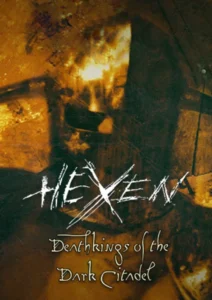
The expansion Deathkings of the Dark Citadel added three hubs, 20 single-player levels and six deathmatch levels, and sold separately from March 22, 1996 in North America. Raven’s source code was released on January 11, 1999 and re-released under GPL-2.0-only on September 4, 2008, which led to ports for Linux, AmigaOS and OS/2. A third game, Hecatomb, was planned, according to John Romero, but the trilogy ended with Hexen II.
The 2025 Release: Heretic + Hexen
On August 7, 2025, Bethesda, id Software and Nightdive Studios released Heretic + Hexen with Hexen, Deathkings and a new Hexen episode, Vestiges of Grandeur, plus Heretic and its new episode. PC Gamer says the Nightdive version makes Hexen “almost fun to play”: the map shows important switches and doors before you visit them, hub areas have signs that track what you have done and what remains, and you can change class mid-game. Xbox Wire adds a Hexen Chronicle for switching characters, and online crossplay for up to 16 players.
Where to Play It
Hexen is sold as part of Heretic + Hexen on Steam, GOG, the Microsoft Store, the PlayStation Store and the Nintendo eShop, for PC, Xbox, PlayStation 4 and 5, and Switch. It launched at $14.99 and was available on Game Pass at launch. According to PC Gamer, owners of any of the original games get the bundle for free. The older Steam and GOG collection was delisted just before the re-release. Prices vary by store and change with sales, so check the store page.