 PC
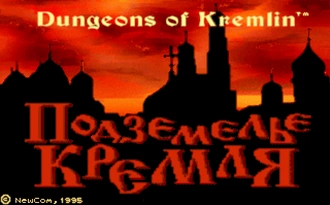
PCDungeons of Kremlin (Russian: Подземелья Кремля) is a highly obscure, independently developed 1995 first-person shooter released exclusively for MS-DOS. Developed by the Russian software team Gelios (specifically engineers Alexander and Andrey Razbakov) and published by NewCom, it holds a unique place in gaming history as one of the very first commercial 3D shooters developed entirely in Russia. Heavily inspired by Western titans like Wolfenstein 3D and Doom, it replaced the traditional sci-fi demons and Nazis with figures from Russian folklore and history.
Core Concept
The story is delightfully bizarre. During an excavation beneath the Moscow Kremlin, archaeologists accidentally uncover an ancient, hidden wooden palace (“Хоромы нечисти”). Naturally, this action disturbs the slumbering evil beneath the city, unleashing a massive horde of mutants, monsters, and angry spirits. You play as a brave “digger” who descends into the depths to clean up the archaeologists’ mess, armed with modern firearms to save Moscow.
Gameplay and Features
Built on a custom engine that more closely resembled the flat, orthogonal, maze-like architecture of Wolfenstein 3D than the varied elevations of Doom, the game featured some very unique (and occasionally frustrating) design quirks:
- The Bestiary: Instead of fighting space marines or cacodemons, your enemies were deeply rooted in Russian culture and fantasy. You fought giant mutant bats, the restless, floating spirits of ancient Russian Boyars, and even the legendary witch Baba Yaga.
- Tricky Pickups: In most 90s shooters, picking up food or potions healed you. Dungeons of Kremlin actively subverted this. Scattered around the levels were magic mushrooms and mugs of beer—but walking into them actually damaged your health, acting as environmental hazards.
- The Arsenal: The weaponry was fairly standard for a mid-90s shooter, featuring a basic pistol, a machine gun, and a shotgun. However, the game famously lacked any sort of melee weapon; if you ran out of ammunition, you were completely defenseless.
- Old-School Lives System: Unlike Doom, which allowed you to save your progress anywhere, Dungeons of Kremlin utilized a punishing, arcade-style “lives” system. You were given three lives. If you died, you respawned at the beginning of the level and lost all of your collected gear, while the enemies remained dead. If you lost all three lives, it was a permanent Game Over.
- The Structure: The game was relatively short, divided into three increasingly difficult and sprawling stages: The Palace of Evil Spirits, The Underground River, and finally, The Kremlin Basements.
The Legacy
While the game was undeniably clunky—suffering from poor enemy AI, enemies that could occasionally shoot through walls, and a few game-crashing bugs—it was a notable technical achievement for the nascent Russian game development scene. It was successful enough locally to spawn a spiritual sequel in 1996 called Смута: Ожившие мертвецы (Smuta: The Living Dead), which featured vastly improved graphics and outdoor environments.
Today, Dungeons of Kremlin is largely considered “abandonware” and exists mostly as a fascinating, janky historical curiosity. It is kept alive by dedicated retro-FPS communities, archivers, and Doom modders (who have actually recreated the game as a total-conversion mod within the Doom engine to make it smoother to play).
Quick Note
Dungeons of Kremlin is the ultimate definition of an obscure 90s “Doom Clone” injected with a heavily localized twist.
In short: If you have ever wanted to navigate an early-3D labyrinth underneath Moscow while shooting a shotgun at Baba Yaga and actively trying to avoid poisonous beer, this piece of Russian gaming history is your only option.